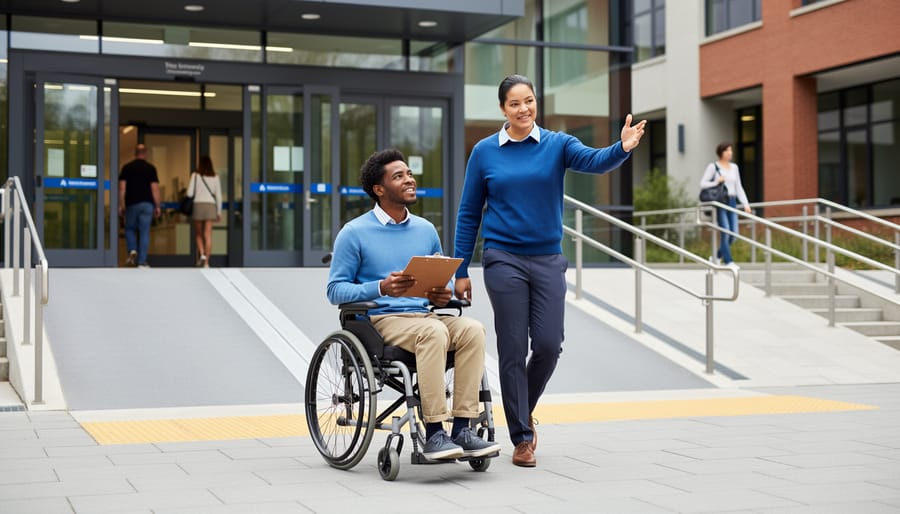
Education is a right, not a privilege, and disabled students in 2026 have stronger legal protections and more accommodation options than ever before. The Americans with Disabilities Act and Section 504 of the Rehabilitation Act guarantee equal access to higher education, requiring colleges and universities to provide reasonable accommodations that level the playing field without lowering academic standards. Understanding how to request these supports, document your needs, and advocate for yourself transforms the college experience from a series of obstacles into a pathway to career success.
The landscape has shifted dramatically in recent years. Disability services offices now coordinate everything from extended test time and accessible course materials to assistive technology and modified housing. But many students don’t realize these services exist until they’re struggling, or they assume accommodations mean special treatment rather than equal access. The reality is simpler: accommodations remove barriers so you can demonstrate what you actually know.
This guide walks you through the entire process, from understanding your legal rights before you apply to college through securing workplace accommodations after graduation. You’ll learn exactly what documentation you need, how to have productive conversations with professors, and which technologies can make coursework more manageable. Whether you’re a high school senior planning your next steps, a current college student who needs support, or a family member helping someone navigate the system, you’ll find clear answers and practical strategies that work in real classrooms right now.
Understanding Disability in Educational Contexts
Disability in education isn’t one-size-fits-all. The term encompasses a vast spectrum of conditions, each affecting learning in different ways. Physical disabilities might involve mobility challenges requiring accessible campus facilities. Sensory disabilities include visual or hearing impairments that benefit from specialized formats and assistive devices. Cognitive and learning disabilities like dyslexia, ADHD, or processing disorders affect how students absorb and retain information. Mental health conditions such as anxiety, depression, or PTSD can impact concentration, attendance, and social engagement.
What many people don’t realize is that most disabilities aren’t immediately visible. A student with chronic pain, epilepsy, or a processing disorder may appear no different from their peers, yet face significant barriers in standard learning environments. This invisibility can make self-advocacy even more challenging, as students sometimes encounter skepticism about their needs.
The educational impact of disability is highly individual. Two students with the same diagnosis may require completely different support strategies. One student with ADHD might thrive with structured breaks and ambient noise, while another needs complete silence and extended time. This variability is why universities moved away from prescriptive accommodation lists toward personalized plans that consider each student’s unique challenges and strengths.
Understanding your specific needs and how your disability affects your learning is the first step toward getting effective support. There’s no standard disabled student experience, and that’s precisely why flexible, individualized accommodation systems exist.
Your Legal Rights as a Disabled Student
Understanding your legal rights isn’t just empowering, it’s essential for accessing the education you deserve. In the United States, two major federal laws protect disabled students in higher education: Section 504 of the Rehabilitation Act of 1973 and the Americans with Disabilities Act (ADA). These laws prohibit discrimination based on disability and require colleges and universities to provide equal access to educational opportunities.
Here’s what that means in practice. Your institution must provide reasonable accommodations in higher ed that allow you to participate fully in academic programs, services, and activities. These aren’t special advantages, they’re adjustments that level the playing field so your disability doesn’t prevent you from demonstrating your actual abilities.
Universities can’t exclude you from programs because of your disability, charge you extra fees for accommodations, or limit your participation in courses, activities, or housing. They also can’t retaliate against you for requesting accommodations or filing a complaint.
However, there’s a crucial difference from high school: you must self-identify and request accommodations. Unlike K-12 education, colleges aren’t required to seek you out or automatically provide support. You’ll need to register with your disability services office and provide documentation of your disability. The institution then works with you to determine appropriate accommodations that don’t fundamentally alter academic standards or create undue financial burden.
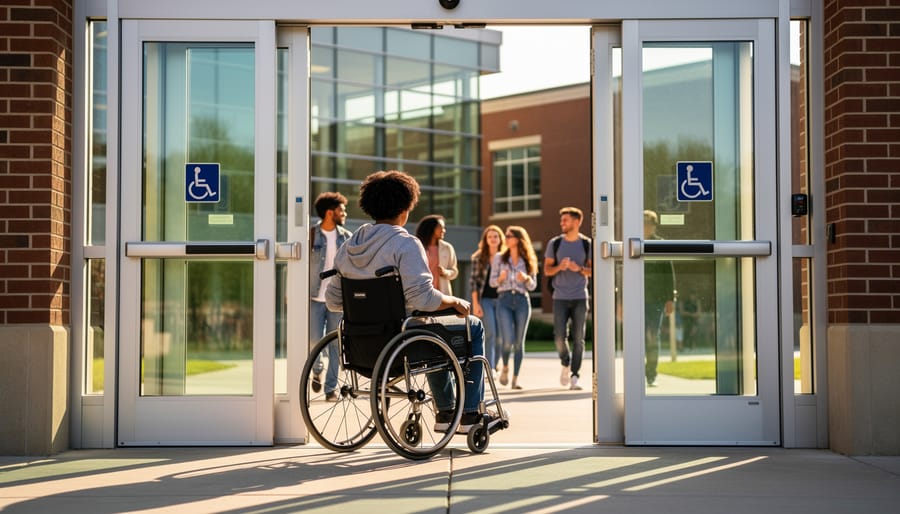
Your rights extend beyond the classroom too. They cover campus housing, dining services, transportation, recreational facilities, student organizations, and all other aspects of campus life. If a university receives federal funding, which nearly all do, it must ensure disabled students have equal access to the complete college experience.
Navigating the Accommodation Process
Before You Start: Getting Your Documentation Ready
Most universities require documentation that establishes your disability and its impact on your academic performance. This typically means a letter or evaluation from a qualified healthcare provider, psychologist, or specialist who has diagnosed and treated you.
What counts as “qualified” varies by disability type. Learning disabilities usually need psychoeducational testing from a licensed psychologist. Physical disabilities might require documentation from your GP or specialist. Mental health conditions need letters from psychiatrists, psychologists, or counselors. Chronic illnesses and sensory disabilities should be documented by relevant medical specialists.
The recency requirement differs across institutions, but most ask for documentation within the last three to five years. Permanent conditions like visual impairment or mobility disabilities may not need recent updates if your original diagnosis clearly states the condition is lifelong. However, conditions that fluctuate or develop over time, like mental health diagnoses or learning disabilities, typically need current documentation showing how they affect you now.
Your documentation should describe your diagnosis, explain functional limitations in academic settings, and ideally suggest accommodations. If getting fresh documentation seems expensive or difficult, contact your university’s disability services first. Many offices can work with older documentation or help you access affordable assessment options.
Working With Your Disability Services Office
Building a strong working relationship with your disability services office starts with preparation and clear communication. Before your first meeting, organize your thoughts about how your disability affects your learning, specific examples are more helpful than general descriptions. You might say “I struggle to take notes during fast-paced lectures because of my processing speed” rather than simply “I have trouble in class.”
Approach the staff as partners in your success, not gatekeepers. They understand the documentation and accommodations process and can help translate your needs into effective support. Be honest about what’s working and what isn’t, and ask questions when you don’t understand something. Many students find it useful to schedule regular check-ins rather than waiting until problems escalate.
Remember that disability services staff typically support hundreds of students, so communicate proactively. If an accommodation isn’t being implemented in a specific class, reach out promptly with details: the course name, instructor, and what’s happening. Similarly, if your needs change mid-semester due to health fluctuations or new challenges, let them know immediately.
Keep records of all communications and accommodation letters. This documentation becomes essential if you need to advocate for yourself later.
When Accommodations Aren’t Working
Sometimes accommodations that looked perfect on paper don’t translate to real support. Maybe your professor isn’t following through on extended testing time, or the note-taking service keeps sending incomplete materials. Don’t suffer in silence.
Start by documenting every issue: save emails, note dates when accommodations weren’t provided, and keep copies of your accommodation letter. Then request a meeting with your disability services coordinator to problem-solve together. Often, a simple clarification or adjustment resolves the situation.
If nothing changes, escalate formally. Most universities have a grievance procedure specifically for accommodation disputes. Contact the dean of students or your institution’s ADA compliance officer. Federal law requires schools to provide effective accommodations, and persistence pays off when you’re advocating for what you legally deserve.
Common Academic Accommodations That Transform Learning
Academic accommodations aren’t one-size-fits-all solutions. They’re personalized adjustments that remove barriers so you can demonstrate your actual abilities, not fight against limitations that have nothing to do with course content. Think of accommodations as the educational equivalent of curb cuts: once designed for wheelchair users, they now help everyone from parents with strollers to delivery workers with hand trucks.
The most effective accommodations directly address the specific barriers you face while maintaining academic standards. Extended time on exams, for instance, doesn’t make tests easier. It simply accounts for processing differences, allowing students with ADHD, dyslexia, or anxiety disorders to show what they know without racing against neurotypical time constraints. Many students find that 1.5x time transforms their performance from barely passing to truly excelling.
| Disability Category | Common Accommodations | Practical Benefits |
|---|---|---|
| Learning disabilities (dyslexia, dyscalculia) | Extended time, audiobooks, speech-to-text software, alternative exam formats | Reduces processing pressure, allows multiple input methods, demonstrates knowledge without format barriers |
| ADHD and executive function differences | Reduced-distraction testing, note-taking support, deadline extensions, organizational coaching | Minimizes environmental interference, supports task management, provides structure |
| Physical disabilities | Accessible seating, note-taker, alternative textbook formats, flexible attendance for medical appointments | Ensures physical access, reduces fatigue, accommodates medical needs without academic penalty |
| Mental health conditions | Attendance flexibility, late withdrawal options, reduced course load, private testing space | Acknowledges symptom fluctuations, reduces anxiety triggers, allows recovery without derailing education |
| Sensory disabilities (blind, deaf, hard of hearing) | Sign language interpreters, CART captioning, screen readers, tactile materials, Braille texts | Provides information in accessible formats, ensures full classroom participation |
Alternative format materials represent another game-changing accommodation category. Digital textbooks work with screen readers for blind students. Audiobooks help students with dyslexia or visual processing disorders. Large-print materials assist those with low vision. These aren’t luxuries; they’re access points to the same information your classmates get in standard print.
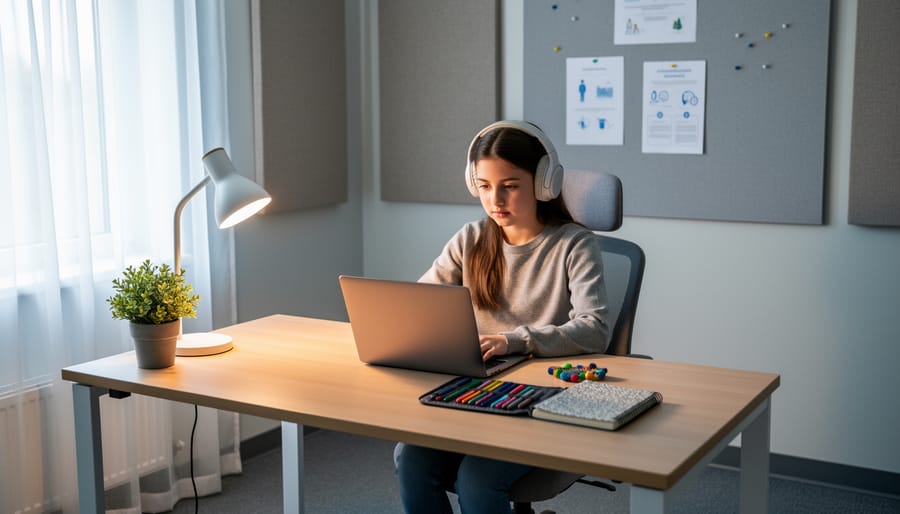
Testing accommodations extend beyond time adjustments. You might take exams in a separate, quiet room to minimize distractions. Some students use computers instead of handwriting. Others receive questions read aloud or dictate answers to a scribe. Students with chronic pain or fatigue might take exams in multiple sessions rather than one exhausting sitting.
Classroom accommodations keep pace with daily learning. Priority registration lets you build schedules around energy levels, medical appointments, or classes in accessible buildings. Note-taking services provide copies of peer notes when your disability interferes with simultaneous listening and writing. Recording lectures helps students who need to review material multiple times or miss nuances during real-time processing.
Attendance policies can flex for disabilities with unpredictable symptoms. Students with chronic illnesses, mental health conditions, or conditions requiring frequent medical care shouldn’t face automatic failure for absences beyond their control. Reasonable attendance flexibility acknowledges that sometimes disability management takes precedence over physical presence, especially when course content remains accessible through recordings or alternative participation methods.
Beyond the Classroom: Campus Life and Support Networks
Campus life extends far beyond lecture halls, and accessible housing often determines whether you can fully participate in university life. Start your housing search early, accommodations like ground-floor rooms, accessible bathrooms, visual fire alarms, or proximity to dining halls fill quickly. Many universities maintain specialized housing for students with disabilities, while others integrate accessibility features across residence halls. Don’t settle for “close enough.” If standard options won’t work, request a housing exception through your disability services office.
Transportation poses daily challenges that nondisabled students rarely consider. Map your campus thoroughly before classes start. Identify accessible bus routes, wheelchair ramps, automatic doors, and rest areas between buildings. Many campuses offer paratransit services or golf cart shuttles for students who can’t navigate long distances. Snow, construction, and broken elevators will disrupt your routes, always have backup plans and build extra travel time into your schedule.
Mental health support matters especially for disabled students, who face higher rates of anxiety, depression, and burnout from constantly advocating for basic access. University counseling centers should offer therapists experienced with disability-related concerns, but availability varies drastically. Some students find peer support more valuable than clinical services. Disability cultural centers and student organizations create spaces where you don’t have to explain yourself constantly or justify your existence.
Building community with other disabled students transforms the university experience from isolated struggle to shared advocacy. These connections provide practical wisdom about which professors actually honor accommodations, which buildings have the best accessible entrances, and how to navigate bureaucracy efficiently. You’ll find disabled student unions, identity-specific groups, and informal networks through disability services events. These relationships often become your strongest support system, offering both friendship and collective power to push for systemic change on campus.
Technology and Tools That Level the Playing Field
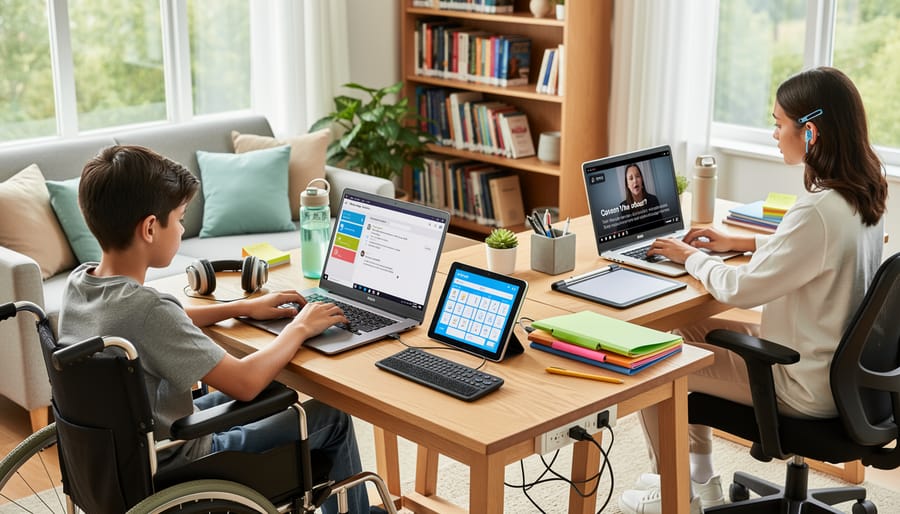
Technology has transformed how disabled students access education, and in 2026, the range of tools available is broader and more powerful than ever. The key is finding what works for your specific needs and learning style.
Screen readers and text-to-speech software have become remarkably sophisticated, with tools like JAWS, NVDA, and Voice Dream Reader offering natural-sounding narration across documents, websites, and textbooks. For students with dyslexia or visual impairments, these programs turn written content into audio, making reading assignments manageable. Many now integrate with learning management systems, so you can navigate your course materials without switching between multiple programs.
Speech-to-text tools like Dragon NaturallySpeaking and built-in dictation features on smartphones help students who struggle with typing or handwriting. You can dictate essays, take notes during lectures, and respond to discussion posts using your voice. The accuracy has improved dramatically, though you’ll still need to proofread for subject-specific vocabulary.
Organizational apps combat executive function challenges that many disabled students face. Tools like Notion, Todoist, and Forest help you break down assignments, set reminders, and manage deadlines without getting overwhelmed. Time-blocking apps and Pomodoro timers can structure your study sessions, while note-taking apps like OneNote allow you to organize course materials in ways that make sense to you.
Specialized learning platforms now offer built-in accessibility features. Audiobooks through services like Audible or Learning Ally provide textbook alternatives, while apps like Quizlet and Anki let you create custom flashcards with audio, images, or simplified text. For math and STEM subjects, tools like MathTalk and Desmos support students who need alternative ways to work with equations and graphs.
The right combination of tools creates a personalized learning environment where your disability doesn’t limit your potential.
Planning Your Career Path With Confidence
Remote and Flexible Work: New Opportunities for 2026
The remote work revolution has fundamentally changed career accessibility for disabled professionals. In 2026, over 40% of employers offer hybrid or fully remote positions, eliminating barriers like inaccessible transportation, physical building challenges, and rigid attendance requirements that traditionally limited opportunities.
Start your job search by targeting companies with established remote-first cultures rather than those forced into flexibility during the pandemic. Look for employers advertising permanent remote roles, not temporary arrangements. Job boards like FlexJobs, and We Work Remotely specialize in legitimate flexible opportunities across industries.
During interviews, assess whether flexibility is genuinely embedded in company culture. Ask about collaboration tools, communication norms, and how performance gets measured. Companies comfortable with remote work focus on outcomes rather than monitoring physical presence or tracking hours logged.
Remote work doesn’t mean working without accommodations. You still deserve ergonomic equipment, flexible schedules for medical appointments, and assistive technology support. Clarify these needs once you receive an offer, just as you would for an in-office role. Many employers provide home office stipends specifically for accessibility equipment.
The key advantage is choice. Remote work lets you design an environment that maximizes your productivity and comfort, creating opportunities that simply didn’t exist a few years ago.
Building Your Professional Network
Building meaningful professional connections starts with finding spaces where accessibility isn’t an afterthought. Disability-focused professional organizations like the American Association of People with Disabilities (AAPD) and Disabled in Higher Education often host networking events, mentorship programs, and online communities where you can connect with professionals who share similar experiences.
LinkedIn groups dedicated to disability employment and professional development offer low-pressure ways to engage with industry leaders. When reaching out to potential mentors, be specific about what you’re seeking, guidance on navigating workplace accommodations, advice on your chosen field, or insights about accessible employers. Many professionals appreciate direct asks: “I’m a student studying marketing with a mobility disability, and I’d value your perspective on accessible career paths in this field.”
Your university’s alumni network can be surprisingly powerful. Disability services offices sometimes maintain lists of alumni willing to mentor current students. Career centers increasingly partner with disability employment organizations to connect students with inclusive employers who actively recruit diverse talent.
Don’t overlook informal networking: disability advocacy groups, conferences, and even Twitter threads where disabled professionals discuss their work create genuine connections that can evolve into mentorship relationships or job opportunities.
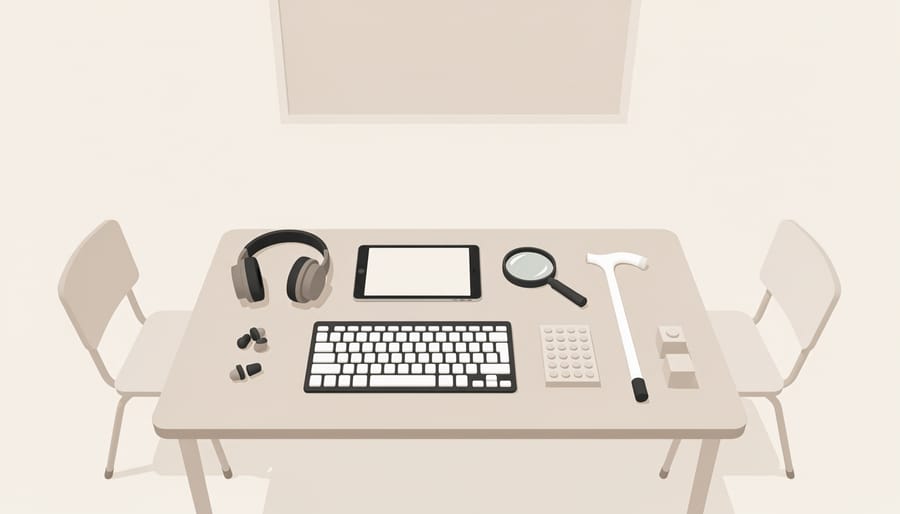
Real Student Experiences: What Works and What Doesn’t
Maya, a third-year psychology student with ADHD and anxiety, wishes she’d started using her accommodations from day one. “I tried to ‘prove myself’ first semester without support,” she says. “My grades tanked, and it took two years to recover my GPA. Now I use extended time on every exam, and I’ve made the Dean’s List twice.” Her biggest lesson? Accommodations aren’t a crutch, they’re an equalizer that lets you show what you actually know.
James, who has chronic pain and uses a wheelchair, discovered that building relationships with professors early made everything easier. He sends a brief email before each semester explaining his needs and offering to discuss concerns. “Most professors appreciate the heads-up,” he notes. “They’d rather know upfront than scramble mid-semester when I need flexibility.” He’s learned to request accessible seating charts and backup plans for field trips well in advance, which prevents last-minute panic.
Sophie, a business major with dyslexia, credits audiobooks and speech-to-text software with transforming her experience. “I can finally keep up with reading loads that used to take me three times longer,” she explains. Her advice is to experiment with multiple tools until you find what clicks. What didn’t work? Assuming one accommodation would fix everything. She adjusted her plan each semester based on different course demands.
The recurring theme across students: self-advocacy gets easier with practice, but you shouldn’t have to fight for basic rights. When Marcus’s accommodations were repeatedly ignored, he escalated to the disability services director, who intervened directly. “I felt guilty making waves,” he admits, “but my education matters too much to stay silent.”
Accessible education isn’t a privilege you need to earn. It’s your right, protected by law and supported by resources designed specifically to help you succeed. The barriers you face are real, but they’re not insurmountable when you know how to navigate the system and advocate for what you need.
You’ve now got a roadmap: understand your rights, engage with disability services early, request accommodations confidently, and build networks that support your goals. These aren’t just theoretical steps. Thousands of disabled students use these exact strategies every semester to complete degrees, land internships, and launch meaningful careers.
The journey won’t always be smooth. You’ll encounter gaps in understanding, staff who need education about your needs, and systems that require patience to navigate. That’s normal, not a reflection of your capability. When accommodations fall short, you have clear escalation paths. When you hit frustration, remember the community of disabled students, advocates, and allies who’ve walked this path before you.
Your perspective and experiences make you a stronger student, colleague, and professional. The problem-solving skills you develop navigating accessibility challenges translate directly to workplace success. Employers who understand this don’t just accommodate disabled talent; they actively seek it out.
Start where you are. Reach out to your disability services office tomorrow. Connect with one student organization. Request that first accommodation. Each step forward proves what you already know: you belong in higher education, and you have every tool needed to thrive there.