
We Work Remotely has become the go-to job board for finding legitimate remote positions, but landing one of these opportunities in 2026 requires more than just clicking “apply.” With approximately 34.3 million Americans working remotely for pay and over 12,000 active remote job listings available as of April 2026, competition remains fierce while fully remote roles represent only 6% of all job openings.
Here’s the reality: while about 25% of all paid workdays now happen from home, the vast majority of positions (87%) remain fully in-office. That narrow window of remote opportunities means you need a strategic approach to stand out. We Work Remotely streamlines your search by aggregating quality remote positions across tech, marketing, customer support, and creative fields, but success depends on how you position yourself.
Students and young professionals entering this space face unique challenges. You’re competing against experienced candidates who’ve already proven they can deliver results without in-person supervision. The platform won’t do the heavy lifting for you. You’ll need to demonstrate self-direction, communication skills, and tangible results from previous work, whether that’s internships, freelance projects, or academic achievements.
This guide breaks down exactly how to use We Work Remotely effectively, what employers actually look for when hiring remote workers, and how to build a profile that gets responses. We’ve gathered insights from hiring managers who’ve filled hundreds of remote positions and partnered with career services offices at leading universities to understand what works for newer professionals entering the remote workforce. The remote job market has matured, and knowing how specialized platforms function gives you a measurable advantage.
The Remote Work Reality Check: What the Numbers Actually Show
You’ve probably heard that remote work is everywhere now, but here’s what the data actually tells us: the gap between perception and reality is wider than you might think. While approximately 34.3 million Americans worked remotely in April 2025 and about 25% of all paid workdays happen from home, the BLS telework statistics show that the telework rate has held steady between 18% and 24% since late 2022. It hasn’t exploded the way headlines sometimes suggest.
The disconnect becomes clearer when you look at job listings rather than current employment. The vast majority of open positions in the US are fully in-office, accounting for 87% of available roles. Hybrid positions make up about 7%, while only 6% of job listings are fully remote. That small slice represents the entire pool you’re competing for when searching remote-only opportunities.
Canada shows a somewhat different picture. Approximately 18-22% of Canadian workers currently work fully remote, with another 35-40% in hybrid arrangements. Over 12,000 active remote job listings were available across Canada as of April 2026, suggesting a healthier remote market north of the border.
What does this mean for you? First, understand that landing a fully remote position requires strategic effort. You’re not just competing against local candidates anymore; you’re up against applicants from across the country or even globally. Second, these numbers highlight why using specialized platforms matters. When only 6% of listings meet your criteria, filtering through generic job boards wastes precious time you could spend crafting stronger applications for genuine remote opportunities.
Why Specialized Remote Job Platforms Outperform Generic Job Boards

Generic job boards present a frustrating paradox for remote work seekers: they host millions of listings yet bury the few genuine remote opportunities under mountains of irrelevant posts. When only 6% of US job listings are fully remote, scrolling through platforms dominated by in-office and hybrid roles wastes hours that could go toward actually applying and preparing.
Specialized remote job platforms solve this efficiency problem through pre-filtering. Every listing meets baseline remote work criteria, eliminating the need to verify whether “flexible schedule” actually means work-from-home or just shifted office hours. This curation matters enormously when you’re competing against hundreds of other applicants, time spent searching is time not spent crafting tailored applications or developing relevant skills.
The quality difference extends beyond filtering. Dedicated platforms attract employers who genuinely understand remote work structures, not companies treating remote positions as reluctant pandemic holdovers. You’ll find detailed information about time zone requirements, communication tools, and whether the role offers true location independence or requires residence in specific regions. Generic boards rarely enforce this clarity, leaving applicants to discover geographic restrictions only after investing time in applications.
Success rates improve because specialized platforms create self-selecting communities. Job seekers there understand remote work expectations around communication, self-management, and digital collaboration. Employers posting on these platforms expect candidates familiar with remote work realities, reducing mismatches where neither party truly wants a distributed arrangement.
For students and early-career professionals entering a market where remote positions represent a small fraction of opportunities, focused platforms transform the search from needle-in-haystack frustration into a manageable, strategic process. The concentration of relevant listings means your effort yields better returns.
What We Work Remotely Offers Students and Early-Career Professionals

Entry-Level Remote Opportunities Worth Pursuing
Not all remote roles demand extensive experience. Customer support positions consistently offer entry points, with many companies hiring for chat and email support that can be learned on the job. Content writing and social media management represent strong options for those with solid writing skills, particularly if you can demonstrate ability through a portfolio or college projects.
Technical roles also welcome beginners. If you’re looking to find your calling in technology, junior developer positions, quality assurance testing, and technical support regularly appear on platforms like We Work Remotely. Those interested in design can break into UX through internships or junior positions that emphasize learning potential over years of experience.
Data entry, virtual assistant work, and project coordination roles also hire candidates with limited professional backgrounds. The key is targeting companies that explicitly state they’re open to training new remote workers and can provide structured onboarding, rather than those expecting you to hit the ground running independently.
Building Your Remote-Ready Profile
Employers seeking remote workers prioritize demonstrated self-discipline and communication skills over impressive credentials alone. Start by documenting tangible evidence of your ability to work independently. If you’ve completed group projects for coursework, highlight instances where you coordinated across schedules or managed tasks without constant supervision. Freelance work, even small projects, proves you can deliver results without someone watching over your shoulder.
Technical proficiency matters more in remote settings. Familiarize yourself with collaboration tools like Slack, Asana, Trello, and Zoom before you need them. Many universities now integrate these platforms into coursework specifically to prepare students for distributed work environments. Take advantage of these opportunities to build genuine comfort with remote workflows.
Your written communication deserves particular attention. Remote teams rely heavily on clear, concise written exchanges. Practice articulating complex ideas through email and documentation rather than defaulting to in-person explanations. This skill separates candidates who struggle remotely from those who thrive.
Create a portfolio showcasing work you’ve completed independently. For roles in design, writing, marketing, or development, this demonstrates both your skills and your ability to execute without hand-holding. Include process documentation that shows how you approached problems and managed your time.
Many colleges now offer remote work readiness programs or certifications. These aren’t just resume padding, they signal to employers that you understand the unique demands of distributed teams. Some programs connect students directly with companies piloting remote internships, creating pathways into positions that rarely appear on public job boards.
Making Remote Job Platforms Work for Your Career Search
Finding opportunities on remote job platforms requires more strategy than simply browsing listings. Students and young professionals often overlook critical steps that separate successful applicants from those who submit dozens of applications without results.
Start by treating your profile like a professional portfolio. Most platforms allow you to create a candidate profile that employers browse when they’re actively hiring. Complete every field with specific details about your skills, remote work experience (even if it’s from academic group projects or volunteer work), and what you’re genuinely seeking. Generic profiles get overlooked.
- Set up precise job alerts based on specific roles and keywords rather than broad categories, filtering for entry-level positions that match your actual qualifications.
- Research companies before applying by checking their profile on the platform, reading about their remote culture, and understanding what they actually need.
- Customize each application by addressing the specific requirements mentioned in the posting, demonstrating you’ve read beyond the job title.
- Follow up strategically within a week if the platform allows messaging, asking a thoughtful question about the role rather than just checking on application status.
- Track your applications in a spreadsheet, noting which types of positions get responses so you can refine your approach.
Your application materials need adaptation for remote work. Beyond tailoring your resume to highlight relevant skills, you should build your LinkedIn presence since many remote employers verify candidates through professional networks before interviewing.
Timing matters more than most realize. Many platforms see the highest activity on Sunday evenings and Monday mornings when hiring managers plan their week. Applying early in a posting’s lifecycle increases visibility, particularly for roles that attract hundreds of applicants.
Stand out by demonstrating remote work competencies in your materials. Mention experience with collaboration tools, self-directed projects you’ve completed, and your home workspace setup. Remote employers prioritize candidates who understand the unique demands of distributed work rather than those simply wanting to avoid commuting.
Beyond Job Listings: The Remote Work Ecosystem
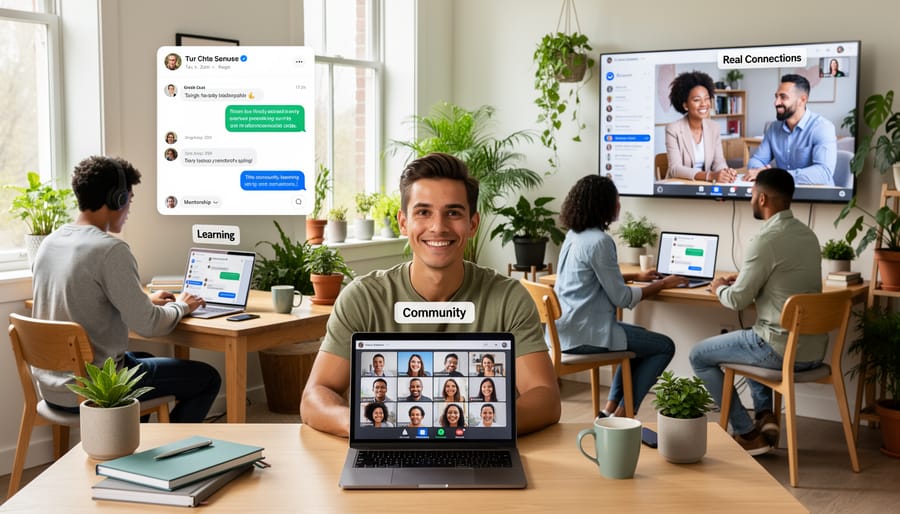
Remote job platforms like We Work Remotely serve as gateways to something larger than individual listings. They connect you to communities where remote professionals share strategies, troubleshoot challenges, and swap opportunities that never make it to public boards. Many platforms host forums or Slack channels where you can ask questions about specific companies, learn which organizations genuinely support remote work culture, and discover which roles translate best to distributed teams.
These ecosystems often provide resources that accelerate your transition into remote work. You’ll find guides on setting up home offices, managing time across zones, and communicating effectively in asynchronous environments. Some platforms offer webinars featuring hiring managers who explain exactly what they look for in remote candidates, demystifying the selection process for students without prior remote experience.
Skill development opportunities frequently appear alongside job listings. Courses on project management tools, remote collaboration software, and digital communication help you build competencies that employers actually need. Understanding accessibility standards for digital work environments, for instance, makes you more valuable as organizations expand their remote hiring to diverse candidate pools.
Networking happens differently in remote work communities but remains equally valuable. You connect with professionals across geographic boundaries who might mentor you, refer you for positions, or collaborate on projects that build your portfolio. Following company blogs and remote work thought leaders through these platforms keeps you informed about industry shifts, emerging remote-friendly sectors, and evolving expectations for distributed teams.
The ecosystem extends your job search from transaction to education, transforming how you approach remote work as a long-term career path rather than just a next position.
Common Mistakes to Avoid When Searching for Remote Work
The promise of remote work attracts scammers who exploit job seekers’ eagerness for flexibility. Watch for positions requesting payment for training materials, asking for banking details before a formal offer, or promising unrealistic salaries for minimal experience. Legitimate remote employers never ask candidates to pay upfront fees or purchase equipment from specific vendors. Familiarize yourself with common remote job scam red flags before applying to unfamiliar companies.
Many students expect remote roles to require less commitment than office positions. This misconception leads to applications that downplay availability or suggest casual engagement. Remote employers actually prioritize reliability and communication skills because distance makes accountability harder to monitor. Your application should demonstrate self-discipline and proactive communication habits, not frame remote work as a convenient side arrangement.
Applying to every remote listing without matching your qualifications wastes time and damages your credibility. With only 6% of US job listings fully remote, competition is fierce. Focus on positions where your skills genuinely align with requirements rather than mass-applying to anything labeled remote. Generic cover letters stand out immediately to hiring managers reviewing hundreds of applications for limited spots.
Finally, ignoring time zone requirements creates problems before you start. Some remote positions expect specific working hours to overlap with team schedules. Clarify expectations during interviews rather than assuming complete flexibility, which rarely exists for entry-level roles requiring collaboration and supervision.
Finding remote work in 2026 requires both realism and strategy. Yes, only 6% of job listings are fully remote, but that still translates to over 12,000 active opportunities across North America right now. Specialized platforms like We Work Remotely cut through the noise, showing you only genuine remote positions instead of forcing you to filter through thousands of irrelevant postings on traditional job boards.
Your success depends on combining the right tools with the right approach. Use dedicated remote job platforms to find legitimate opportunities efficiently. Simultaneously, build skills that remote employers actually need and develop a profile that demonstrates you can thrive without daily oversight. Set realistic expectations about competition and timeline, but don’t let statistics discourage you.
The remote work landscape isn’t going anywhere. With roughly one in five North Americans now working remotely and companies continuing to hire distributed teams, opportunities exist for those who approach the search strategically. Start exploring platforms designed for remote work today. Your first remote role might be closer than you think.