
Voice user interface (UI) design courses teach you how to create conversational experiences for smart speakers, voice assistants, and other speech-driven platforms. Most programs run between 4 and 12 weeks and cover dialogue flow mapping, natural language design, accessibility standards, and prototyping tools like Voiceflow or Adobe XD. You’ll gain skills that bridge UX design, linguistics, and audio engineering, preparing you for roles in tech companies, agencies, and startups building the next generation of hands-free experiences.
If you’re considering this path, you’re entering a field where traditional visual design rules don’t apply. Voice interfaces require you to think in conversations rather than screens, anticipating how people speak naturally and designing for moments when they can’t look at a device. The best courses balance theory with real-world projects, often featuring guest speakers from companies like Amazon, Google, or Spotify who share how voice products are built and tested in professional settings.
The challenge many students face is choosing between bootcamps, university certificates, and online self-paced programs. Each offers different trade-offs in cost, time commitment, and depth of instruction. Understanding what makes a voice UI program truly valuable means looking beyond the course description to examine the curriculum’s focus on user research, ethical AI considerations, and portfolio development.
This guide walks through the core competencies taught in voice UI courses, compares the main types of programs available in 2026, and shows you how to evaluate which option aligns with your career goals and learning style.
Why Voice UI Design Skills Matter for Your Career

The voice interface design market is experiencing rapid expansion as more companies integrate conversational technology into their products and services. Industry reports show steady growth in voice-enabled devices and applications, with businesses across tech, healthcare, automotive, and retail sectors actively seeking designers who understand how people communicate with technology through speech.
Salary expectations for voice UI designers typically exceed those of traditional UI roles. Entry-level positions start around £35,000, £45,000 in the UK, while experienced designers with a strong portfolio command £55,000, £75,000 or more. Senior voice design leads at major tech companies often earn upwards of £80,000, reflecting the specialized nature of this skill set.
What makes voice UI design particularly attractive is the diversity of hiring companies. Beyond obvious players like Amazon, Google, and Apple, automotive manufacturers are building voice-first interfaces for vehicles. Healthcare providers need designers who can create accessible voice interactions for patients with mobility challenges. Financial institutions are developing voice banking features. Smart home companies, gaming studios, and enterprise software providers all require designers who understand conversational flow and audio user experience.
Career experts point out that voice UI designers occupy a unique position at the intersection of multiple disciplines. You need visual design sensibilities, copywriting skills for conversational scripts, understanding of human psychology and linguistics, plus technical knowledge of voice platforms and audio design principles. This combination makes you valuable because you can bridge communication gaps between product teams, engineers, and content strategists.
The specialization also offers flexibility. Many voice UI designers work remotely or freelance, consulting on projects across multiple industries. As voice technology becomes embedded in everyday products, from kitchen appliances to fitness equipment, the scope for creative problem-solving continues expanding. Companies recognize that poor voice interactions frustrate users and damage brand reputation, making skilled voice designers essential rather than optional hires.
What You’ll Actually Learn in a Voice User Interface Design Course
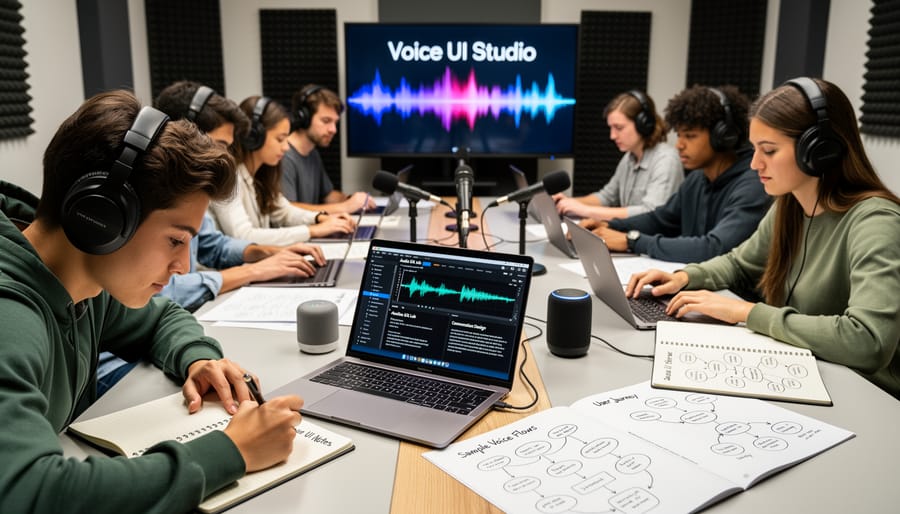
Voice UI design courses teach you to design conversations, not screens, a fundamental shift that requires rethinking how people interact with technology. While traditional UI design focuses on visual elements like buttons and layouts, voice interface design centers on dialogue flows, natural language patterns, and audio feedback that guides users through tasks without visual cues.
The core curriculum typically starts with conversational design principles, where you’ll learn to map out dialogue trees and anticipate how users naturally phrase requests. You’ll study turn-taking mechanics, error recovery strategies, and how to design for different speaking styles and accents. This means creating voice user flows that account for interruptions, clarifications, and the messy reality of human speech patterns, very different from the linear navigation paths in visual interfaces.
Audio UX principles form another major component, teaching you how sound shapes user experience. You’ll explore voice selection, tone, pacing, and how audio cues can signal success, errors, or system states. This includes understanding the psychology of voice interaction: why certain vocal characteristics build trust, how silence can communicate meaning, and when to use earcons versus spoken feedback.
Comprehensive voice UI courses cover these essential skills and competencies:
- Designing multi-turn conversations that feel natural and handle context shifts
- Creating voice personas and writing scripts that match brand identity
- Prototyping with tools like Voiceflow, Adobe XD voice prototyping, or conversational design platforms
- Understanding speech recognition limitations and designing around transcription errors
- Implementing accessibility considerations for diverse users and accents
- Testing voice interfaces with real users and iterating based on conversational data
- Working with wake words, invocation phrases, and voice command structures
You’ll also learn technical aspects like slot filling, entity recognition, and how natural language processing affects what you can design. Most courses include hands-on projects where you build voice experiences from scratch, starting with simple commands and progressing to complex, context-aware interactions. This practical work helps you understand constraints you’ll face in real development environments, preparing you to collaborate effectively with engineers and product teams who implement your designs.
Where to Find Quality Voice UI Design Training
University Programs and Academic Options
Universities increasingly recognize voice UI design as a critical specialization within their interaction design and human-computer interaction programs. Several institutions now embed conversational interface modules into existing UX degrees, while a handful offer dedicated voice-first design tracks. You’re typically looking at a four-year bachelor’s degree or one-to-two-year master’s program if you pursue this route.
Entry requirements usually include a design portfolio for undergraduate admissions, though you don’t need prior voice UI experience, just a foundation in visual design, user research, or creative problem-solving. Graduate programs often prefer applicants with some professional design experience or a related undergraduate degree.
Academic pathways provide structured learning that connects voice UI principles to broader interaction design theory. You’ll study linguistics, cognitive psychology, and accessibility, learning how voice interfaces must address hidden accessibility barriers that screen-based interfaces might overlook. Universities partner with tech companies for curriculum development, giving you access to industry-standard tools and sometimes internship placements.
The trade-off? Time and cost. Degree programs demand multi-year commitment and significant tuition investment, making them ideal if you’re starting your design career or seeking comprehensive theoretical grounding alongside practical skills.
Online Courses and Self-Paced Learning
Online platforms offer remarkable flexibility for learning voice UI design around your existing commitments. Major providers like Coursera, Udemy, and LinkedIn Learning host courses developed in partnership with companies like Google, Amazon, and IBM, giving you direct exposure to the tools and frameworks these industry leaders actually use. You’ll typically find structured curricula that let you progress at your own pace, with video lectures, hands-on exercises, and project work you can complete evenings or weekends.
Many platforms now integrate online accessibility standards directly into their voice UI curricula, teaching you to design inclusive experiences from day one. Look for courses offering downloadable resources, active discussion forums, and submission feedback on your projects. The self-paced model works exceptionally well if you’re disciplined and self-motivated, though you’ll miss the real-time collaboration and structured deadlines that some learners need to stay accountable.
Bootcamps and Intensive Programs
Bootcamps compress months of learning into weeks, typically running 8-12 weeks with full-time immersion or 16-24 weeks part-time. You’ll spend your days building actual voice interfaces, receiving immediate feedback from industry practitioners, and collaborating on group projects that mirror real workplace scenarios.
These programs work best if you already have basic UX or design knowledge and need to specialize quickly. Career changers with transferable skills, like former teachers understanding instructional flow or customer service professionals grasping conversation design, often thrive in this format. The intense pace demands serious commitment; expect 40-60 hours weekly for full-time tracks.
Most bootcamps include portfolio reviews, mock interviews, and sometimes job placement support, making them strong options when you’re ready to enter the field within months rather than years.
What to Look for When Choosing a Course
Picking the right voice UI design course isn’t about choosing the most expensive or prestigious option, it’s about finding a program that actually equips you for the work employers need done. Start by examining whether the course gives you tangible deliverables for your portfolio, not just certificates. The best programs build projects around real conversational scenarios: designing voice flows for smart home devices, creating audio feedback systems, or prototyping multimodal interfaces that combine voice and visual elements.
Check what industry tools you’ll learn. Courses that teach current platforms like Voiceflow, Dialogflow, Amazon Alexa Skills Kit, or Adobe XD’s voice prototyping features demonstrate they’re connected to what studios and tech companies actually use. If the syllabus lists only theoretical frameworks without naming specific software, that’s a red flag.
- Review sample student projects from previous cohorts to assess output quality and complexity
- Verify instructor backgrounds, look for professionals actively working in voice design, not just academics teaching theory
- Examine the balance between lecture content and hands-on practice (aim for at least 60% applied work)
- Check whether the course includes user testing components where you’ll gather real feedback on voice prototypes
- Investigate career support services: job placement rates, employer partnerships, and alumni network strength
Instructor credentials matter more than you might think. A course led by someone designing voice experiences for Spotify or Google brings current industry insights that textbooks can’t match. Look for teaching staff who share case studies from their own work and can explain trade-offs they’ve navigated in production environments.
Finally, prioritize programs that demonstrate commitment to knowledge accessibility and inclusive course support. Voice UI design itself centers on accessibility, so a course that doesn’t accommodate diverse learning needs misses the point of the discipline entirely.
Building Your Portfolio While You Learn

Starting your portfolio doesn’t have to wait until course completion, some of the best projects emerge while you’re still learning. The key is treating coursework as real-world practice, documenting your process, and showcasing how you think through problems.
Begin with redesigns of existing voice interfaces. Pick a popular voice app and reimagine key interactions. Maybe Amazon’s shopping experience could better handle follow-up questions, or a podcast app’s voice navigation feels clunky. Create conversation flows showing your improved version, explaining what you changed and why. These exercises prove you can critique and refine interfaces critically.
Next, tackle projects addressing genuine user problems. Design a voice interface for ordering coffee that remembers preferences, or create conversational flows helping international students navigate university services. Document your user research, even if it’s just three interviews with classmates, and show how their feedback shaped your design decisions. Employers want evidence you design for real people, not imaginary users.
For each project, present the full story. Include your initial concept sketches, conversation flow diagrams, sample dialogue scripts, and ideally, prototype recordings demonstrating the interaction. Tools like Voiceflow let you build working prototypes that reviewers can actually test, which beats static mockups hands down.
Create a dedicated portfolio site organizing projects by complexity or problem type. Write brief case studies explaining each project’s context, your design approach, constraints you worked within, and what you learned. Keep descriptions crisp, hiring managers spend maybe two minutes per portfolio initially.
Share works-in-progress on LinkedIn or design communities. The feedback strengthens your work, and the visibility puts you on recruiters’ radars. One student landed interviews simply because her documented learning process demonstrated genuine enthusiasm and growth mindset.
From Course Completion to Job Landing
Completing a voice UI design course marks the beginning of your job search journey, not the end. The transition from student to employed designer requires strategic action, starting with how you present yourself to potential employers.
Your course network becomes your first professional asset. Reach out to instructors for informational interviews, they often have direct connections to companies building voice products. Classmates become future collaborators and referral sources, so maintain those relationships beyond graduation. Many educational institutions also offer alumni networks specifically for connecting students with industry professionals in emerging tech fields.
Position yourself as someone who solves specific problems, not just someone who completed coursework. When approaching companies, research their voice products and identify design gaps or opportunities you could address. Tailor your application materials to show how your training in conversational flows or audio UX directly applies to their current challenges. This includes understanding career accessibility considerations in voice interface design, which many companies now prioritize.
Attend industry events where voice technology professionals gather, conferences, webinars, and local UX meetups with voice UI themes. These settings let you demonstrate knowledge in casual conversation and make memorable impressions. Don’t just collect business cards; follow up with specific references to discussions you had, offering to share portfolio work that relates to topics you discussed.
Apply persistently but strategically. Voice UI roles might be listed under various titles: conversational designer, voice experience designer, or simply UX designer with voice responsibilities. Set up alerts for these variations and apply quickly when positions appear, this emerging field moves fast.
Voice UI design is more than a trending skill. It’s a gateway to careers that blend creativity, technology, and human-centered thinking in ways traditional design roles rarely offer. Whether you’re drawn to working with major tech companies shaping the next generation of smart devices, startups innovating in accessibility, or agencies crafting conversational experiences across industries, this specialization gives you options.
The educational pathways are just as flexible. You can commit to a comprehensive university program, upskill through focused online courses around your current schedule, or dive into an intensive bootcamp for a career pivot. What matters most is choosing training that matches how you learn best and what you want to achieve professionally.
Start by exploring one or two programs that align with your timeline and budget. Look at their project work, talk to alumni if possible, and consider which approach will give you the portfolio pieces and confidence you need. Voice UI design courses exist across every learning style and career stage. The field is growing, the opportunities are real, and your first step is simply deciding to begin.