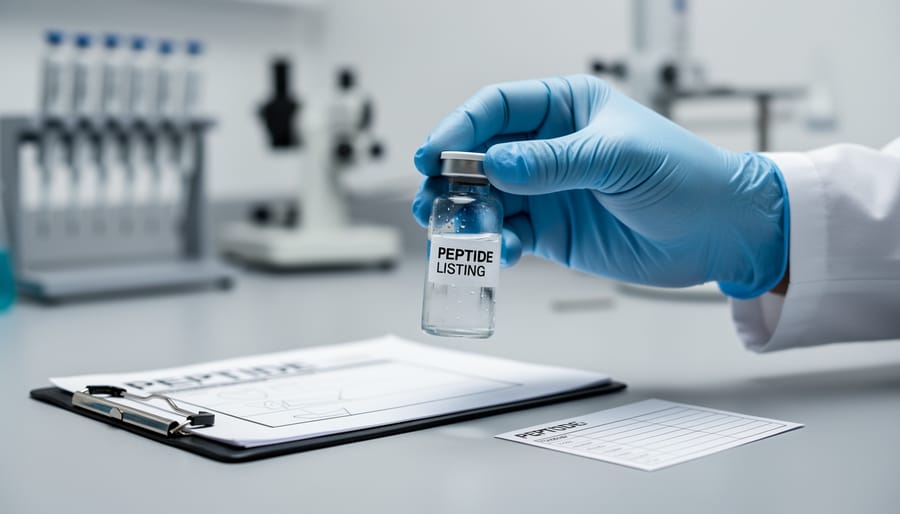
The most likely problem with a suspect peptide listing is missing batch-specific proof of quality. If you can’t find a recent, independent test report that matches the exact product and lot number, click here to see how one supplier presents its product pages, and treat the listing as unverified and hold off on buying until you’ve compared what’s shown against the checks in this article.
Here’s the quickest check. Look for a lot number on the listing, then ask for the matching test report. Real suppliers send it without fuss. If the answer is vague, or the report is a generic template, that’s your first red flag.
Other warning signs are just as easy to spot: prices far below the going rate, no company address, missing storage guidance, and bold health claims that no research supports. None of these proves a listing is bad on its own. Stack a few together and the picture changes fast.
This guide walks you through sorting symptoms, understanding the likely causes, and verifying a listing step by step. We’ll finish with habits that make careful sourcing second nature.
Why bother? Your lab supervisor, your institution, and your future employer all expect it. Sourcing carefully protects your results and your reputation, and it’s a skill that shows up on your record long before any degree does. If a listing ever raises safety or compliance questions, stop and talk to your supervisor or your institution’s safety office before going further.
Is This Listing a Problem? Quick Symptom Triage
Warning Signs You Can Spot in Under Five Minutes
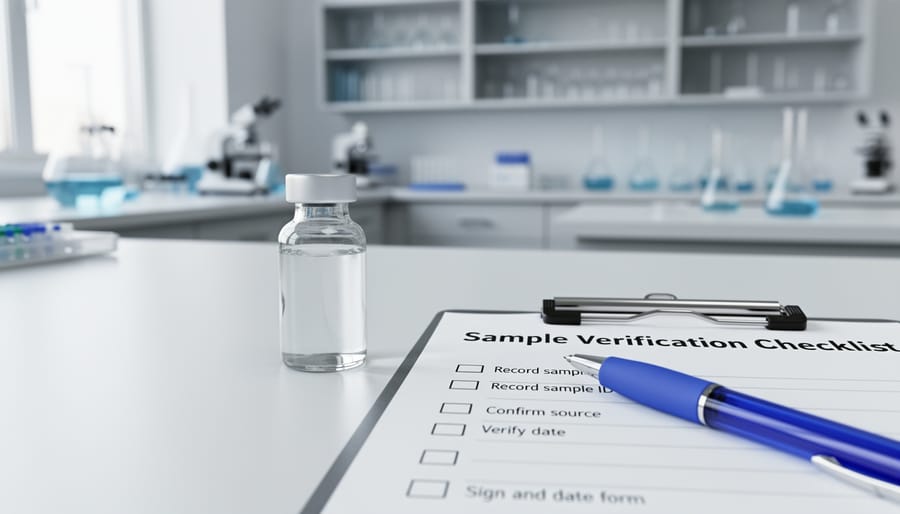
You don’t need a lab coat to catch the obvious problems. Give any listing a quick five-minute scan and look for these:
- No batch or lot number: Without one, there’s no way to trace what you’re actually getting.
- No named testing lab: “Third-party tested” means little if the lab is never identified.
- Stock photos only: If every image looks copied from elsewhere, the seller may never have handled the product.
- No company contact details: A real business lists an address, email, or phone number you can actually reach.
- Claims that sound too good to be true: Promises of guaranteed results or “miracle” outcomes are a warning, not a selling point.
- Prices far below the going rate: A steep discount can signal corners cut on sourcing, testing, or storage.
One red flag doesn’t automatically mean a listing is bad. A missing photo might just be sloppy design. But when two or three show up together, treat that as your cue to slow down and dig deeper.
Think of it like reading a job posting. A vague role, no company name, and an unrealistic salary would make you pause before applying. The same instinct applies here. Spotting these patterns quickly is a small skill, but it’s exactly the kind of careful thinking lab supervisors and employers notice.
Why These Red Flags Show Up: Likely Causes Behind Poor-Quality Listings
When Paperwork Looks Real but Isn’t

A certificate can look polished and still tell you nothing. The problems tend to repeat, so they’re worth learning to spot.
Start with the basics. A real certificate names the lab that ran the tests and shows a date. If either is missing, treat it as decoration, not evidence. Next, compare certificates across different batches. When two “separate” lots come with identical numbers, the same layout down to the last decimal, and the same signature, someone probably recycled one report. Genuine testing produces small natural differences from batch to batch. This pattern, often called CoA reuse and verification is a known weak point in online listings.
The third problem is the hardest to see: a report that looks fine but can’t be confirmed. If the lab that supposedly issued it has no record of the batch, or you can’t find the lab at all, the document proves nothing.
A university research compliance officer put it plainly: “Verified documentation is something I can trace back to a named lab, a specific lot, and a person I can contact. If I can’t make one phone call or send one email to confirm it, I don’t treat it as verified.”
That one check often settles the question faster than studying the paperwork ever could.
How to Check a Listing Step by Step

What to Do If You’ve Already Spotted a Problem
Spotting a red flag after you’ve already clicked, ordered, or even received something can feel unsettling. It’s also completely fixable, and acting calmly now protects you and everyone around you.
Start with the most important step: stop. Don’t open, use, or hand the product to a classmate or colleague. Set it aside somewhere clearly labeled so nobody mistakes it for approved lab material. Then gather your evidence while the details are fresh. Take screenshots of the listing, the seller’s profile, any certificates, and your order confirmation. Save emails and receipts too, because listings can vanish overnight.
Here’s a quick way to match what you noticed to your next move:
| What you notice | How worried to be | What to do next |
|---|---|---|
| Vague description or stock photos only | Low | Ask the seller for details and hold off on relying on it |
| Certificate with no lab name or date | Medium | Save screenshots and try to verify it with the issuing lab |
| Price far below the going rate or pressure to buy fast | Medium | Pause the order and compare with other sellers |
| Reused certificates or no contact details | High | Stop, report the listing, and tell your supervisor |
Next, report the listing through the platform’s reporting tool so others are protected. Finally, bring in a supervisor, instructor, or your institution’s safety office. Asking for help isn’t a mistake. It’s exactly what careful professionals do.
Building a Habit of Careful Sourcing: Prevention for Your Career
Careful sourcing isn’t just a lab rule. It’s a career skill, and the habits you build while checking a questionable listing are the same ones employers look for. Research assistants, lab interns, quality assurance staff, and procurement coordinators all get paid, in part, to ask “How do we know this is what it claims to be?”
Three habits carry over to almost any role. First, due diligence: confirm claims with an independent source instead of taking a seller’s word. Second, documentation: save screenshots, order records, and notes so anyone can retrace your steps later. Third, asking good questions. “Who approved this supplier?” and “Where does this paperwork come from?” signal maturity, not doubt.
You don’t have to learn this alone. Many universities run lab safety and responsible purchasing training, and supervisors or compliance staff are usually glad to explain how sourcing works on your campus. Try a few career development tools to find mentors and training that fit your goals. If you’re aiming for remote research or procurement work, remote job boards are a good place to see how often these roles list vetting skills.
Good research habits also depend on fair access to reliable information. Understanding knowledge accessibility and the role of online accessibility can help you find and evaluate sources more confidently.
How to Fix It Step by Step
Work through these steps in order. Each one answers a specific warning sign, so you can stop as soon as you find your problem.
1. No batch number or testing lab? Pause the purchase and ask the seller for both in writing. A vague or missing reply is your answer.
2. Paperwork that looks copied? Compare dates and lab names across listings. Identical certificates for different batches suggest recycling.
3. Can’t confirm the certificate? Contact the named lab directly, using contact details you found yourself rather than ones printed on the document.
4. Price far too low? Check it against several reputable suppliers. A big gap usually means something was skipped.
5. Still unsure? Bring the listing to your lab supervisor or campus purchasing office before going further.
Here are a few terms you’ll run into while checking:
- Purity
- How much of a product is the intended substance, compared with leftovers or other compounds. It’s usually shown as a percentage.
- Certificate of analysis (COA)
- A report from a lab listing the test results for a specific batch of material.
- Batch or lot number
- A code that ties a product to one production run, so test results can be matched to what you actually received.
- Third-party testing
- Testing done by an independent lab rather than the seller, which makes the results more credible.
- Sterility
- Being free of living microorganisms, which matters most for anything that might contact the body or cell cultures.
Keep a simple record of what you checked and what you found. It’s a habit that pays off in any research role.
Common Questions About Peptide Listing Quality
Most readers land on the same handful of worries, so here are the clearest answers we can give without pointing you to any product.
Does a certificate alone prove a peptide listing is trustworthy?
No. A certificate only helps if it names the lab, shows a date and batch number, and can be confirmed with the lab that issued it. A document that can’t be verified is just a picture.
Does a very low price always signal a problem?
Not always, but it’s a reason to slow down. Prices far below the going rate often mean corners were cut somewhere, so check everything else on the listing more carefully.
Can I trust online reviews?
Treat them as a weak signal. Reviews can be copied, bought, or posted by people who have no way of judging quality, so lean on verifiable documents and supervisor guidance instead.
Who should I ask for help?
Start with your lab supervisor, instructor, or your institution’s purchasing or safety office. They know the sourcing rules that apply to you and can point you to approved suppliers.
If you’ve had a bad experience, you’re not alone, and it’s not a mark against you. Stop using the product, keep your screenshots and order records, and tell someone who can act on it. Reporting the listing also helps the next person avoid the same trap.
The bigger lesson is that asking good questions is a skill, and it’s one that sets people apart in research and lab careers. Learning to question what you’re told, check it independently, and lean on mentors is part of how you empower academics like yourself to take charge of your own learning and professional growth.
Spotting red flags in a peptide listing comes down to a simple habit: slow down, check the signs, and verify things yourself. Here’s the short version to keep in your back pocket:
- Read the full listing from top to bottom, including the fine print.
- Find the batch or lot number and the named testing details.
- Contact the testing lab directly to confirm the report is real.
- Look up the seller’s history and reviews on sites other than the listing page.
- Ask your lab supervisor or institution which suppliers are approved.
- Walk away if anything stays unclear.
None of this is about being suspicious of everything. It’s about being the person who asks the right question before a problem gets expensive, or unsafe. Research assistants, lab interns, and quality assurance teams get trusted with more responsibility because they work this way.
You don’t have to figure it out alone, either. Your supervisors, instructors, and campus safety offices want to help. For more on building careers in the lab, landing research internships, and growing your professional skills, explore the Student Futures resources.