
The traditional career ladder isn’t your only option. In 2026, viable alternatives to the standard office job include freelancing and gig work, skilled trades and apprenticeships, creative industries and portfolio careers, tech bootcamps and self-taught paths, entrepreneurship and small business ownership, remote work and digital nomadism, and nonprofit and mission-driven careers. Each offers real income potential, skill development, and professional growth without requiring years of conventional corporate experience or a standard four-year degree.
If you’re questioning whether the typical entry-level position leading to middle management is right for you, you’re not alone. Students and young professionals are increasingly building fulfilling careers outside traditional structures, and employers now recognize diverse pathways as legitimate preparation for the workforce. According to career development specialists we’ve consulted, alternative paths often provide faster skill acquisition, earlier autonomy, and stronger alignment between personal values and daily work.
The shift matters because the economy has changed. Rigid career trajectories that once promised stability now compete with flexible models offering comparable financial security and often greater satisfaction. Educational institutions have responded by partnering with industry experts to create programs that validate non-traditional experience, from coding bootcamps with job placement guarantees to apprenticeships that pay while you learn.
What follows are seven concrete pathways, each with clear entry points and real-world examples. You’ll find practical steps to get started, insights from professionals who’ve made these choices work, and guidance on which path might suit your skills and goals. These aren’t theoretical alternatives. They’re careers people are building right now.
Why We Chose These Seven Paths
We didn’t choose these seven paths randomly. Each career met four essential criteria that matter to students and young professionals building careers in 2026:
- Accessible entry points that don’t require four-year degrees or massive upfront investment
- Genuine career growth potential with clear advancement opportunities
- Income sustainability that supports independent living within a realistic timeline
- Strong current market demand backed by employment data and industry trends
We validated each option through conversations with career counselors and industry professionals who work directly with people in these fields. Their insights confirmed what the numbers show: these paths offer real opportunities, not just trendy alternatives. Some of these careers also benefit from new partnerships between educational institutions and employers that create clearer pathways for skill development and job placement.
The goal wasn’t to compile every possible alternative career, but to present seven distinct paths where you can actually build something sustainable. These aren’t side hustles or temporary gigs. They’re legitimate careers with communities, professional standards, and people making good livings doing work they find meaningful.
1. Digital Content Creator and Freelance Creative

Digital content creation has evolved from a side hustle into a legitimate full-time career. Creators today earn through multiple revenue streams, including brand partnerships, ad revenue, affiliate marketing, course sales, and direct fan support through platforms like Patreon. While income varies dramatically, established creators with engaged audiences of 10,000 to 50,000 followers often generate $3,000 to $8,000 monthly once they diversify beyond a single platform.
The core skills you need are storytelling, consistency, and audience understanding. Technical abilities like video editing, audio production, or graphic design help, but you can start with a smartphone and free editing software. What matters more is developing a clear point of view and showing up regularly. Successful creators identify a specific niche, whether that’s budget travel tips, sustainable fashion, career advice for teachers, or tech reviews for non-techies, then build trust by solving real problems for their audience.
Platform selection depends on your content format and where your target audience spends time. YouTube works well for longer educational or entertainment content. TikTok and Instagram Reels favor short, snackable videos. Podcasts suit deep-dive conversations and commuter audiences. LinkedIn has emerged as a strong platform for professional creators targeting career-focused audiences. Most successful creators maintain a presence on two to three platforms, repurposing content to maximize reach without burning out.
Maria Chen, a marketing strategist who has consulted with over 200 content creators, emphasizes patience. “The creators who last treat this as a business from day one. They track what resonates, engage authentically with comments, and don’t rely on a single income source. Build your email list early, because algorithm changes can tank your reach overnight, but your subscribers are yours.”
Starting requires minimal investment. Create consistently for 90 days, analyze what performs, then double down on what works.
2. Remote Tech Support Specialist
Remote technical support has exploded as companies shifted to distributed teams and cloud-based systems. If you’re good at explaining technology in plain language and enjoy solving problems, this path offers steady income without the debt of a traditional degree.
Tech support specialists troubleshoot software issues, guide users through installations, and resolve hardware problems, all from home. Companies like Shopify, GitHub, and countless SaaS startups hire remote support teams to assist customers across time zones. The work is structured yet flexible, and many roles start around $40,000 to $50,000 annually, with senior positions reaching $70,000 or more.
You don’t need a computer science degree. Most employers prioritize proven problem-solving ability and customer service skills over credentials. Starting points include CompTIA A+ certification, which costs around $250 and covers hardware, software, and networking fundamentals. Google’s IT Support Professional Certificate on Coursera is another accessible option, taking four to six months of part-time study. These programs teach you to diagnose issues methodically and communicate solutions clearly to non-technical users.
Customer service experience matters more than people realize. Patience, active listening, and the ability to stay calm when someone’s frustrated are the real differentiators. You’ll encounter angry customers whose entire business depends on the software working right now. How you handle that stress determines your success.
Career progression is straightforward. Junior support specialists move into tier-two or escalation roles, then into technical account management, systems administration, or team leadership. Some transition into cybersecurity or DevOps after building technical foundations. The remote nature means you can work for Silicon Valley companies while living anywhere, and many organizations offer learning budgets for continued certification and skill development.
3. Sustainability Consultant for Small Businesses

Small businesses increasingly recognize they need to adapt to environmental expectations, but most lack the in-house knowledge to do it effectively. That’s where sustainability consultants step in, helping local shops, restaurants, offices, and service providers audit their operations, cut waste, and implement greener practices that also save money.
This path appeals to people who want their work to reflect their values while building a business that serves their community. You don’t need an environmental science degree to start. Many successful consultants begin with short courses or certifications in areas like waste management, energy efficiency, or sustainable business practices. Programs from organizations like the Association of Climate Change Officers or online platforms such as Coursera offer targeted training that takes weeks or months, not years.
Your early clients will likely be small retailers, cafes, or local offices looking for practical wins, switching to energy-efficient lighting, reducing single-use packaging, sourcing locally, or setting up composting systems. You’ll conduct operational audits, identify improvement opportunities, and guide implementation. As you gain experience, you can expand into carbon footprint calculations, supply chain sustainability, or helping businesses earn green certifications.
Building a client base starts locally. Attend chamber of commerce meetings, reach out to business improvement districts, and offer free initial consultations to demonstrate value. Word-of-mouth referrals drive growth in this field because results are visible and business owners talk to each other.
Income varies widely at first, you might charge $500 to $2,000 per project depending on scope, but as you establish expertise and case studies, you can command retainer arrangements or specialize in high-value services like sustainability reporting. This career rewards practical problem-solving, relationship building, and genuine commitment to environmental impact.
4. E-commerce Entrepreneur and Online Store Owner
Running an online store is one of the most accessible alternative careers because you can start small, test ideas quickly, and scale at your own pace. Whether you’re selling handmade jewelry, curating vintage finds, or dropshipping trending products, the barrier to entry is lower than most traditional businesses.
Startup costs vary widely. A dropshipping store on Shopify might cost you $30 to $50 monthly to begin, plus modest ad spend for testing products. If you’re making goods yourself, factor in materials and shipping supplies, often a few hundred dollars to launch properly. Print-on-demand models sit in between, letting you sell custom designs without holding inventory.
Platform choice matters. Shopify offers ease and professional templates but comes with monthly fees. Etsy works well for handmade or vintage items and brings built-in traffic, though you’ll pay listing and transaction fees. WooCommerce on WordPress gives you control and flexibility if you’re comfortable with a bit more setup.
Marketing fundamentals include social media presence (Instagram and TikTok work especially well for visual products), email list building from day one, and basic SEO for your product pages. Many successful store owners also explore skills like voice UI courses to stay ahead of emerging commerce trends.
Realistic timelines? Expect three to six months of consistent effort before seeing meaningful profit. Your first sales might come within weeks, but building sustainable income takes testing products, refining your brand, and learning what your audience actually wants. The advantage: you control your schedule, and every skill you develop, from photography to customer service, becomes transferable expertise.
5. Community Health Worker and Wellness Coach

Community health workers serve as vital bridges between healthcare systems and the communities they serve, focusing on prevention and education rather than clinical treatment. If you’re drawn to helping others while working outside a traditional medical setting, this career path offers meaningful work with accessible entry requirements.
The role centers on educating people about health resources, conducting wellness screenings, and connecting individuals with social services. You might work with immigrant communities navigating healthcare systems, run smoking cessation programs, or coordinate nutrition workshops in underserved neighborhoods. Wellness coaches take a related but more individualized approach, guiding clients through behavior changes around fitness, stress management, and lifestyle habits.
Entry requirements vary significantly by role. Community health workers often need a high school diploma plus specialized training programs that take three to six months. Many states now offer certification programs through community colleges or public health departments. Wellness coaching typically requires certification from organizations like the National Board for Health and Wellness Coaching, which involves 50 to 100 hours of training plus passing an exam. Neither path demands a four-year degree, though additional education can expand opportunities.
The work setting shapes your experience considerably. Nonprofits and public health departments offer stability, benefits, and the satisfaction of serving vulnerable populations, with salaries ranging from $35,000 to $50,000. Private wellness coaching allows more flexibility and potentially higher earnings through one-on-one client work, though you’ll need to build your own client base and handle business operations.
What makes this path genuinely rewarding is the tangible impact. You’re not just treating symptoms; you’re empowering people with knowledge and support that can change their lives. Career counselors consistently note that professionals in these roles report high job satisfaction because the work directly aligns with making a difference in their communities.
6. User Experience (UX) Researcher
UX researchers are the detectives of the digital world, uncovering why users click, abandon, or love a product. They conduct interviews, analyze behavior patterns, and translate findings into actionable improvements that make apps, websites, and software genuinely usable. Unlike UX designers who create interfaces, researchers focus on understanding the “why” behind user decisions through methodologies like usability testing, surveys, ethnographic studies, and A/B testing. The role exists across tech companies, financial services, healthcare platforms, retail brands, and government agencies, anywhere humans interact with digital products.
Entry into UX research doesn’t require a traditional four-year degree in the field. Bootcamps like CareerFoundry, Springboard, and General Assembly offer three-to-six-month programs covering research fundamentals, participant recruitment, data analysis, and report writing. Google’s UX Design Certificate on Coursera includes research components and costs under $300. The real barrier isn’t credentials, it’s your portfolio. Recruiters want to see documented research projects showing your process: how you recruited participants, what methods you chose, how you analyzed findings, and what recommendations you made. Start by volunteering research services for local nonprofits or small businesses, or conduct independent studies on public apps and document your process thoroughly.
The job market remains strong, with entry-level researchers earning $60,000 to $75,000 and experienced professionals exceeding $100,000. Remote opportunities are common since research can happen virtually. To stand out, optimize your LinkedIn with keywords like “user research,” “usability testing,” and specific tools you know (UserTesting, Optimal Workshop, Dovetail). Network through UX research communities on Slack and attend virtual meetups where researchers share case studies and hiring managers scout talent.
7. Trade Skills Specialist (Electrician, Plumber, HVAC Technician)
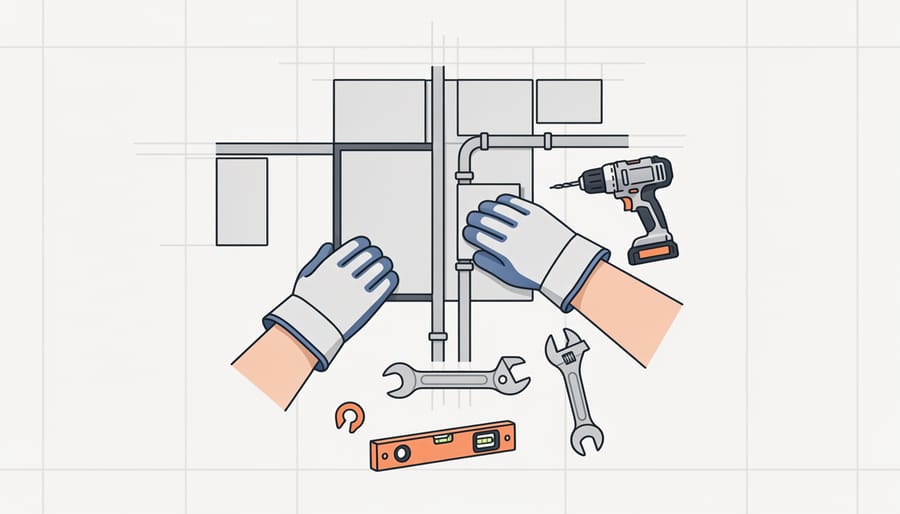
Skilled trades have shed their outdated reputation and emerged as some of the most financially rewarding and secure career paths available in 2026. Electricians, plumbers, and HVAC technicians earn competitive salaries that often surpass those of many four-year degree holders, with median incomes ranging from $55,000 to $85,000 annually, and experienced specialists commanding six-figure salaries in high-demand markets.
The entry path is refreshingly straightforward. Most trades require a high school diploma and acceptance into an apprenticeship program, where you earn while you learn. Training typically takes three to five years, combining hands-on work with classroom instruction, and you graduate debt-free with real-world experience instead of student loans. Trade schools and community colleges offer accessible programs, and many employers sponsor apprenticeships directly.
The stigma that once painted trades as “lesser” careers has crumbled under economic reality. These professionals enjoy genuine independence, whether working for established companies, starting their own businesses, or choosing project-based work that fits their lifestyle. The work cannot be outsourced or automated, creating remarkable job security even during economic downturns.
Trades also address systemic issues in education and career access. Programs increasingly focus on online accessibility for theory components and actively work to remove hidden barriers that historically excluded diverse candidates from these fields.
For students questioning whether a traditional degree is their only option, skilled trades offer a proven path to financial stability, meaningful work, and the satisfaction of solving tangible problems every single day.
Making Your Alternative Path Work for You
Choosing an alternative career starts with honest self-assessment. Ask yourself what energizes you during a typical day, which skills you already have or enjoy developing, and what lifestyle you want five years from now. A digital content creator needs comfort with public sharing and irregular income cycles, while a trade specialist thrives on hands-on problem solving and structured training. Match the path to your actual preferences, not an idealized version of yourself.
Start small and test your interest before committing fully. Volunteer for a sustainability nonprofit on weekends, take a short UX research course online, or shadow someone in your target field for a day. This experimentation costs little but reveals whether the day-to-day reality matches your expectations. Many alternative careers allow part-time entry, so you can build skills and confidence while maintaining current income.
Finding mentors matters enormously in non-traditional paths where there’s no standard playbook. Join industry-specific online communities, attend local meetups for freelancers or trade professionals, and reach out directly to people whose careers you admire. Most practitioners remember needing guidance themselves and will spend thirty minutes on a call if you ask specific, thoughtful questions. LinkedIn and professional associations offer structured mentorship programs that pair newcomers with experienced professionals.
Expect pushback from family or friends who equate security with traditional employment. Prepare calm, factual responses about your chosen path’s income potential, training timeline, and market demand. Share concrete examples of successful professionals in your field and explain your risk mitigation strategy, whether that’s building savings first, starting part-time, or obtaining relevant certifications. You’re not asking for permission, but showing you’ve done serious research eases their concerns and yours.
Common Questions About Alternative Careers
Are alternative career paths actually stable, or will I struggle financially?
Many alternative careers offer strong stability when you build proper skills and establish yourself. Trades like electrician or plumber provide consistent demand and solid income, while fields like UX research or tech support offer growing job markets. The key is treating your path seriously with proper training and business planning.
How do I explain my career choice to parents who want me to follow a traditional route?
Come prepared with concrete information about earning potential, job demand, and your specific plan for building this career. Share examples of successful professionals in your chosen field and explain how your path aligns with your strengths and market realities in 2026. Most parents worry about your security, so address that directly with facts rather than vague aspirations.
Can I switch to an alternative career after starting down a traditional path?
Absolutely. Career changes are increasingly common, and many alternative paths welcome people with diverse backgrounds. Your previous experience often provides valuable perspective, whether that’s customer service skills transferring to tech support or business knowledge supporting your e-commerce venture.
Do I need a college degree to succeed in these careers?
Most alternative paths either don’t require a four-year degree or offer certificate and apprenticeship options as viable entry points. What matters more is developing specific skills, building a portfolio or client base, and demonstrating competence through real work rather than credentials alone.
How long before I can actually support myself financially?
Timelines vary by path. Trade apprenticeships pay while you learn, often reaching good income within two to three years. Freelance and entrepreneurial routes might take six months to two years to build sustainable income. Remote tech roles can provide immediate stability once you complete a bootcamp or certification, typically three to six months of focused study.
The biggest obstacle isn’t the career path itself but the mental shift required to trust your choice. You’ll encounter doubt from people who only understand traditional routes, and that’s normal. What helps is connecting with others already succeeding in your chosen field. Join online communities, attend local meetups, or find a mentor who’s walked this path. Their lived experience becomes proof that your alternative career isn’t just possible but practical, and their guidance helps you avoid common pitfalls while building something sustainable.
The seven paths we’ve covered aren’t backup plans or compromises. They’re legitimate careers with real earning potential, growth opportunities, and the chance to build something meaningful on your own terms. Whether you’re drawn to the creative freedom of content creation, the problem-solving of tech support, or the hands-on satisfaction of skilled trades, there’s no single right answer.
Your career should reflect who you are, not who someone else thinks you should be. Start small: research one path that genuinely interests you, reach out to someone doing it, or take a single introductory course. The traditional ladder isn’t disappearing, but it’s no longer the only way up. Choose the route that actually excites you, then take that first step.